



mis à jour le Jeudi 22 janvier 2026 à 19h12
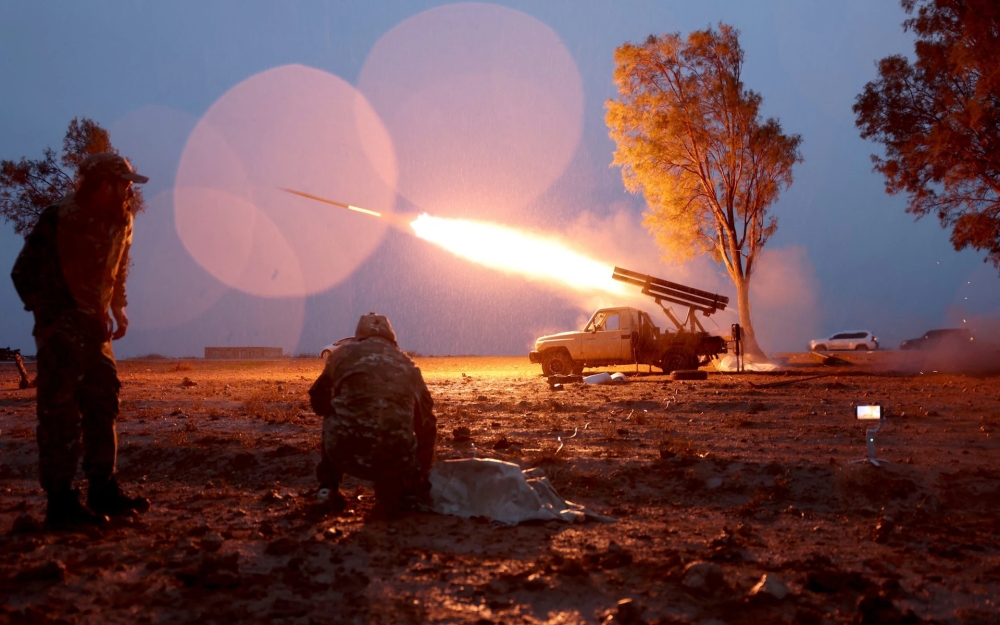
Syrian army launch a rocket towards Kurdish forces near Dibsi Faraj in the northern Syrian Tabqa area on Jan 17, 2026 Credit: Omar Haj Kadour/AFP/Getty Images
Telegraph.co.uk | Con Coughlin Defence and Foreign Affairs Editor
After the sacrifices they made to defeat Islamic State, their reward is being forced to submit to a new Islamist regime
In the long and turbulent history of the modern Middle East, one of the region’s more enduring traits has been the willingness of the world’s major powers to betray the aspirations of the Kurdish people to establish a homeland of their own.
It began with the carve up of the Ottoman Empire at the end of the First World War, when Turkish nationalists forcibly thwarted attempts by the allied powers to establish an independent Kurdistan in what is now south-east Turkey. More recent betrayals include the West’s failure to act when Iraqi dictator Saddam Hussein launched chemical weapons attacks against the Kurds in Halabja in 1988, killing an estimated 5,000 men, women and children.
Now, to judge by the events unfolding in northern Syria this week, history seems set to repeat itself. The US and its allies are once again preparing to indulge in yet another blatant act of perfidy, this time involving the heroic Kurdish fighters who played such a pivotal role in defeating Islamic State (IS) fanatics during Syria’s brutal civil war.
With much of the world’s attention transfixed by the Trump psychodrama in Davos, insufficient attention is being paid to the implications of the latest outbreak of violence in northern Syria, where Islamist government forces have been involved in deadly clashes with pro-western Kurdish fighters.
Kurdish forces provided staunch support in spearheading the US-led campaign to destroy Islamic State’s self-styled caliphate in the Syrian city of Raqqa in 2017, resulting in the Kurds establishing their own autonomous enclave in northern Syria.
From the West’s perspective, the enclave’s significance increased after the fall of Raqqa as it was used to hold the thousands of captured Islamic State terrorists and their dependents, with many of them being held in Kurdish-run prison camps. British-born jihadis, such as Shamima Begum, are among those still being held under Kurdish control.
Western leaders need to take a close interest in events taking place in Syria because – in the event of Kurdish fighters being forced to withdraw – there is a strong possibility that some of Islamic State’s most hardened terrorists will be able to make good their escape and embark on a new campaign of violence.
Concerns have already been raised that Islamic State is quietly rebuilding its terrorist infrastructure, enabling it to carry out high profile atrocities, such as December’s appalling Bondi Beach attack in Australia.
Reports have surfaced that hundreds of Islamic State prisoners have managed to escape as a result of the clashes between the Kurds and government forces, as the regime of Syria’s interim president – the former Islamist fighter Ahmed al-Sharaa – seeks to re-establish government control over the entire country.
Despite once having a $10m US bounty on his head for his previous links with al-Qaeda, al-Sharaa has formed an unholy alliance with US president Donald Trump, who is keen to end America’s long-standing military presence in Syria. Apart from providing backing for the Kurdish-led Syrian Democratic Forces (SDF), Washington currently has around 1,500 troops.
Trump’s keenness to end Washington’s involvement dates back to his first term as president, when he tried to undertake a unilateral withdrawal of US forces in 2019. The move that was condemned as a gross betrayal of the Kurdish cause and resulted in US forces remaining in situ.
Since returning to office, Trump has renewed his efforts to end American involvement in Syria, this time striking up an unlikely alliance with al-Sharaa, who last November became the first ever Syrian leader to visit the White House. The Trump administration is now being credited with having brokered a deal at the weekend whereby the SDF has agreed to integrate its forces into the mainstream Syrian military in return for regime forces assuming control of Islamic State prisons.
But the deep levels of mistrust between the pro-Western Kurds and Syria’s new Islamist regime, which date back to the civil war when the two groups were involved in bitter fighting, has resulted in renewed skirmishes. The Kurds argue, with some justification, that it is naive in the extreme for the Trump administration to believe that former Islamist leaders such as al-Sharaa can be trusted with keeping former Islamic State terrorists under lock and key.
At the same time, they feel a sense of bitter betrayal that, after all the sacrifices they have made helping to defeat Islamic State, their reward is to be forced to submit to the control of Syria’s new Islamist regime.
If recent events in Syria enable Islamic State to rebuild its terrorist infrastructure, then the West will have good reason to rue its latest betrayal of the Kurdish cause.