

Monday, 31 August, 2026 , 17:19
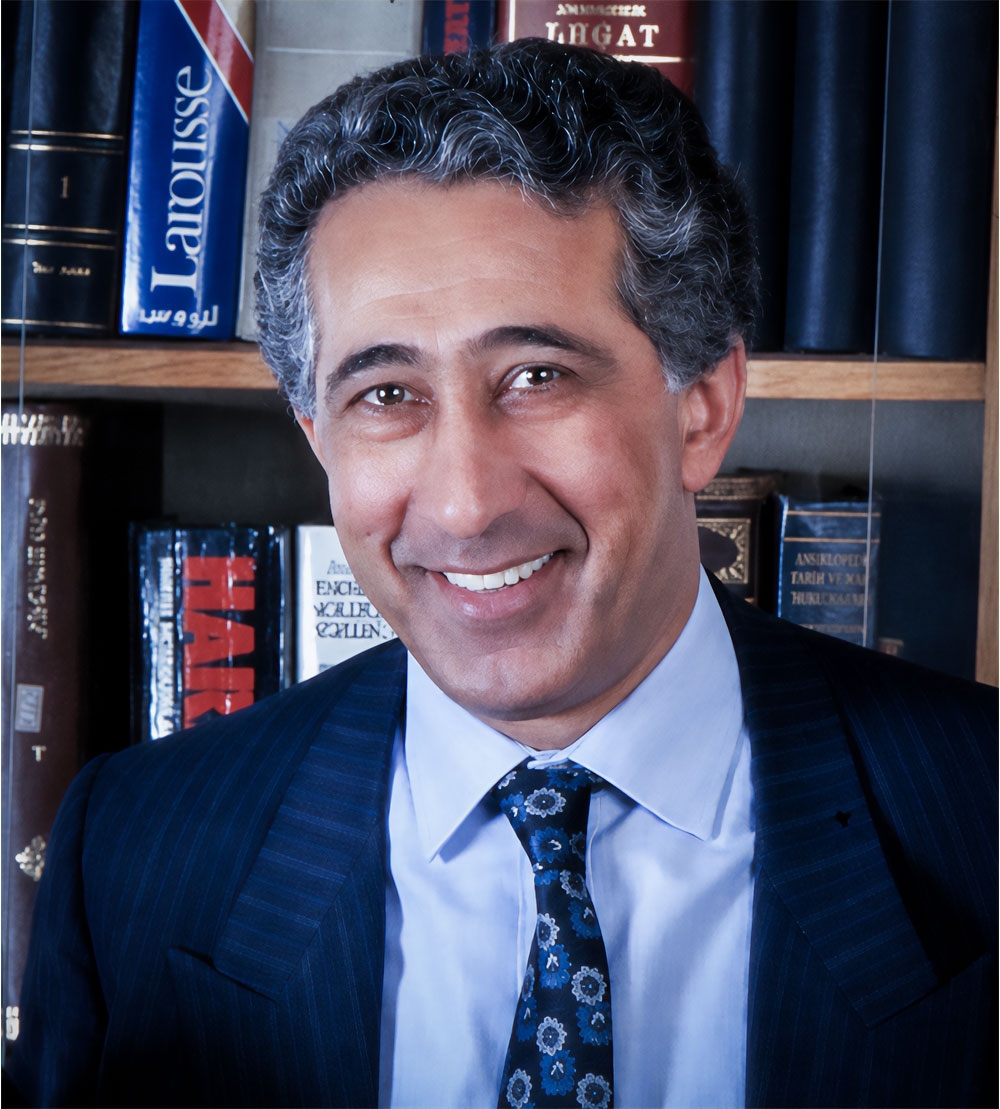
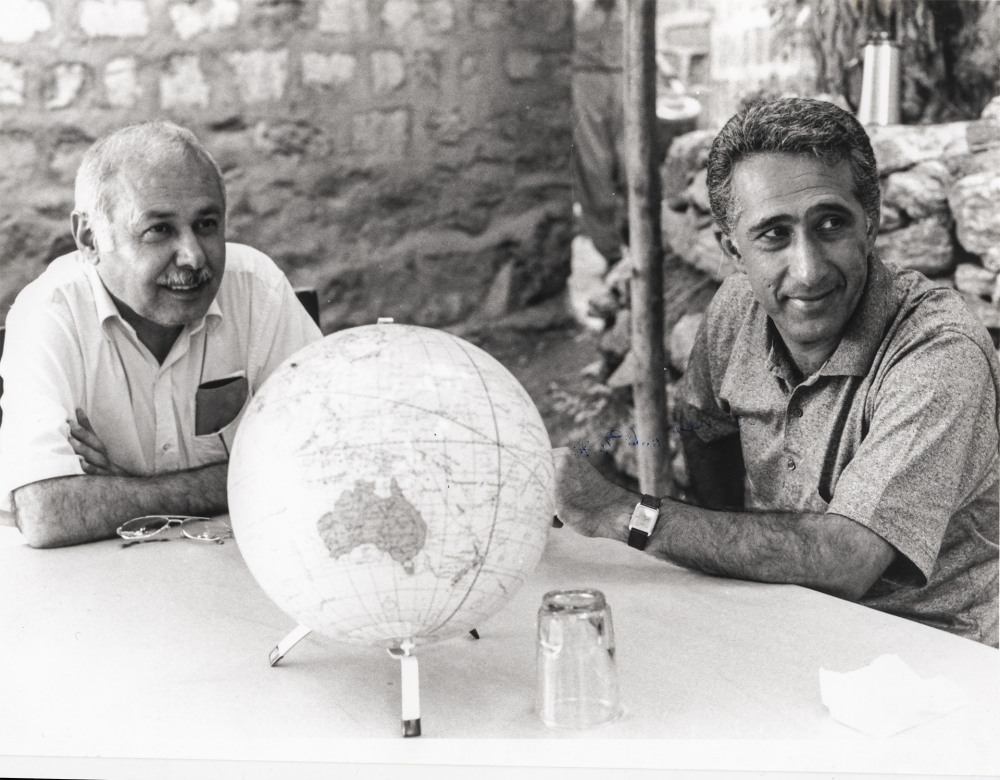
Dr. Sadegh Cherefkendi et Mehdi Zana, in 1991 in Kurdistan
It is with profound sadness that we announce the death of Mehdi Zana, former mayor of Diyarbakir and a leading figure of the Kurdish democratic resistance in Turkey, who passed away on 29 August 2026 in a hospital in Diyarbakir at the age of 86.
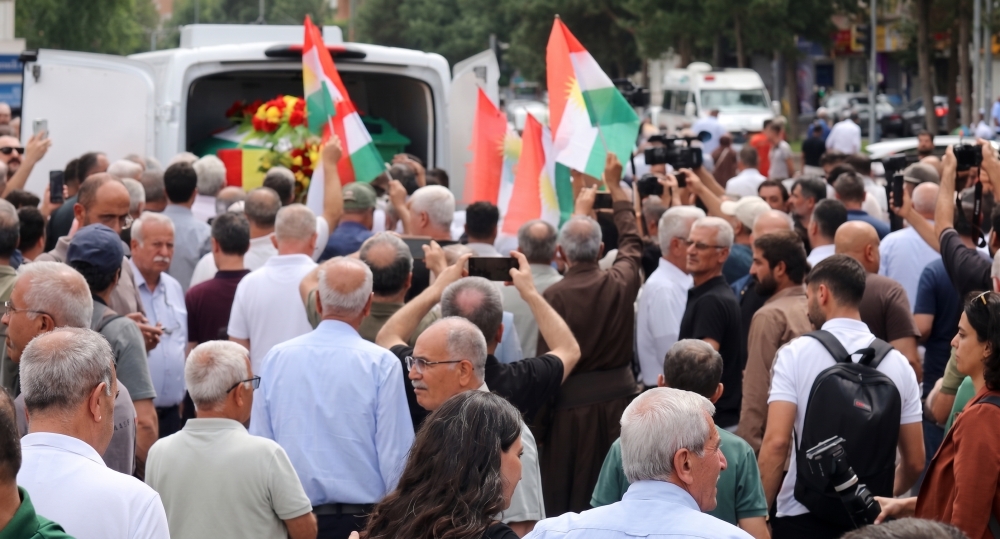
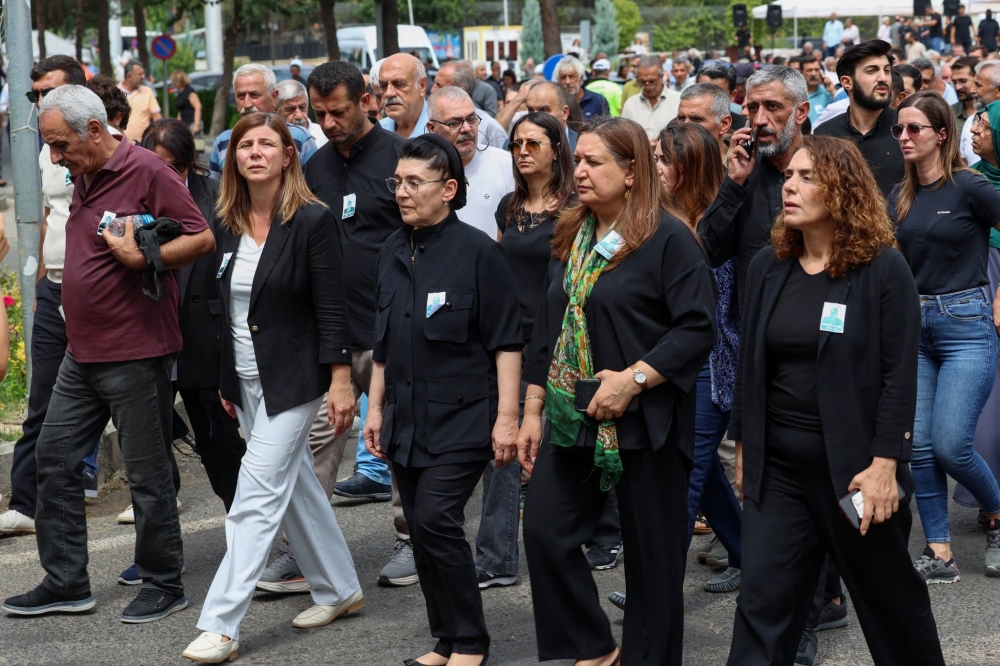
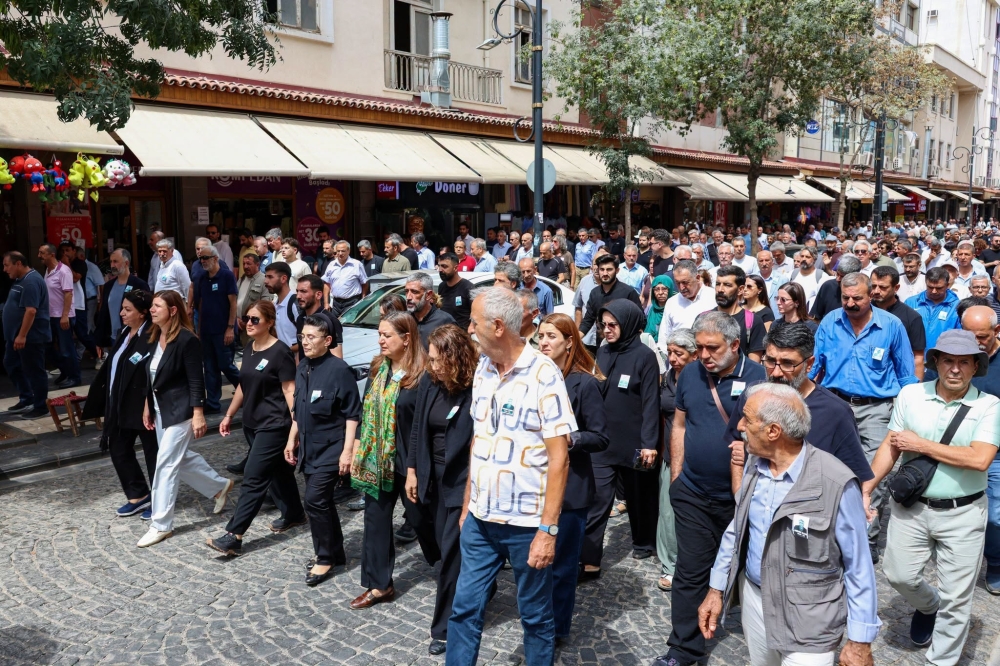
His funeral took place at Yeniköy Cemetery in Diyarbakir on 30 August 2026.
Born on 20 December 1940 in Farqîn (Silvan), an ancient city with a strong Kurdish identity and the capital of the first Kurdish state of the Marwanids in the 10th and 11th centuries, into a middle-class family, Mehdi Zana became involved at a very early age in the peaceful struggle for the rights of the Kurdish people. A young tailor, eager for knowledge and action, moving both among left-wing intellectuals and Kurdish nationalist circles, he was among those who chose to advance the demands of the Kurdish people within the ranks of the legal left and to give priority to peaceful democratic struggle. He was notably one of the main organisers of the "Eastern Meetings", large and peaceful popular gatherings that began in Farqîn in 1968 and spread to the main Kurdish cities as well as Istanbul and Ankara, expressing the cultural, social, economic and political demands of the Kurdish population. The younger generations, overcoming their elders' fear of the Turkish state, threw themselves passionately into these new forms of action. A member of the Workers' Party of Turkey, which was dissolved by the Turkish military junta that came to power in March 1971 for having "recognised", in a resolution adopted at its 4th congress, "the existence of the Kurdish people in the east of the country", he was arrested and imprisoned along with 2,600 other Kurdish activists. Released under a general amnesty decreed in July 1974 by the new centre-left government of Bülent Ecevit, he continued his struggle for a time within the Socialist Party of Kurdistan.
Then, in December 1977, with no money in his pocket and no party apparatus behind him, supported by devoted friends who were themselves equally penniless, he stood as an independent candidate in the election for mayor of Diyarbakir, the political and cultural capital of Turkish Kurdistan. Conducting his entire campaign in Kurdish in the working-class suburbs, presenting himself as a Kurdish and left-wing candidate, fighting both for Kurdish rights and social justice, he came well ahead in a contest in which no fewer than 11 candidates were running. Thus, for the first time in the history of the Turkish Republic, a Kurd openly asserting his Kurdish identity was elected mayor of a city of 225,000 inhabitants, despite the underhand manoeuvres and various forms of intimidation by the police and the army.
Surprised by the verdict of the ballot box, the Turkish government decided to make this experiment fail, regarding it as dangerous because of its potentially contagious nature. However, supported by the left-wing press and a few democratic civil servants, and backed by the population of his city, the new mayor managed to loosen the stranglehold and redouble his efforts to provide disadvantaged working-class neighbourhoods with the basic municipal services, roads, sewerage, electricity, etc., of which they had until then been deprived.
The seemingly insoluble problem of public transportation remained. The government refused him permission to purchase abroad the buses Diyarbakir needed. When contacted, French socialist mayors agreed to invite him to France and to come to the aid of this "democratic socialist mayor, so rare in a Third World country". Within a few months, the solidarity of cities such as Clermont-Ferrand, Grenoble, Nantes and Rennes made it possible in 1979 to send a convoy of around thirty decommissioned buses and municipal vehicles to the besieged Kurdish capital. This initiative brought comfort to the Kurdish population, while the Turkish authorities, deeply displeased, saw in it signs of a "Western conspiracy" aimed at encouraging Kurdish separatism.
Already guilty of being a Kurd and socialist, Mehdi Zana, by defying the authorities, thwarting their calculations and appealing directly to Western democracies, became, in those years when the spectre of "terrorism" was not yet being invoked, a prime enemy of touchy Turkish nationalism. But while many Kurdish activists were murdered or disappeared in mysterious "road accidents", as part of the traditional policy of eliminating Kurdish elites, the mayor of Diyarbakir, surrounded by loyal and devoted friends, was able to ensure his protection and survive. His prominence both at home and abroad undoubtedly protected him as well, which could only intensify the hatred of the Turkish police and military, who dreamed of the moment when they could finally settle accounts with him.
That moment came with the coup d'état of 12 September 1980, carried out shortly after the beginning of the Iraq-Iran war, one of whose main theatres of operations, along five hundred kilometres of border, was Iranian and Iraqi Kurdistan.
The generals' "order" was imposed at the cost of the largest mass arrests in the history of the Turkish Republic. The Istanbul daily Cumhuriyet, the Turkish equivalent of The New York Times, dated 12 December 1989, drew up a damning assessment, reporting six hundred and fifty thousand people taken into police custody and two hundred and ten thousand prosecutions brought following these detentions.
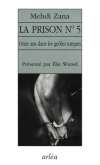
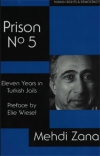
The best-known Kurdish activists, including several mayors, members of parliament and lawyers, were imprisoned in Diyarbakir military prison, where the most barbaric methods of torture were systematically applied in order to break the Kurdish elites physically and morally. Sixty-five Kurdish political prisoners died under torture in Diyarbakir. Others perished in Ankara and Istanbul. Thousands were mutilated and would carry for the rest of their lives the scars of the years spent in this prison hell designed to debase, degrade, dehumanise and terrorise Kurdish detainees. Two survivors of this hell, the lawyers Serafettin Kaya and Hüseyin Yildirim, published harrowing testimonies in Turkish. Mehdi Zana's own account appeared in its complete version under the title Vahşetin Günlüğü (Diary of Barbarity). The essence of this testimony can be found, in the form of interviews, in the abridged English version published under the title Prison N°5 by Blue Crane Books in 1997.
Throughout his years of detention, at every torture session, Mehdi Zana's Turkish torturers questioned him about "his foreign connections" and the "Western supporters of separatism".
A man of peace and an advocate of coexistence between the Turkish and Kurdish peoples, in equality and democracy, he always rejected the use of violence. For this reason, he was quickly adopted by Amnesty International as a "prisoner of conscience". The International Federation for Human Rights dedicated its Paris congress to him, held in 1986 in the presence, among others, of Robert Badinter and Claude Cheysson. A vast international campaign was launched for his release. From François Mitterrand to Willy Brandt, as well as his fellow European mayors, many prominent figures intervened on his behalf with the Turkish military junta. These interventions undoubtedly helped save his life, but they did not prevent the Turkish regime, determined to break and humiliate him, from subjecting him to the worst forms of torture and sentencing him to thirty-two years and eight months in prison, together with lifelong deprivation of his political rights. Respect for an adversary and for his dignity is not part of the Turkish state tradition, which is essentially founded on despotism and on crushing and humiliating the weakest.
Released in 1991 and then imprisoned again in 1994, Mehdi Zana spent a total of more than 16 years of his life in Turkish prisons. Upon his release in 1996, he first went to Paris, where his children had found refuge following the arrest in 1994 of their mother, Leyla Zana, a member of parliament, and then of their father. He subsequently took refuge in Sweden, where he lived until recently, surrounded by his siblings and friends who took care of him. His years in prison and the barbaric torture he had endured there had left serious after-effects and undermined his health.
During his exile in Sweden, Mehdi Zana continued to bear witness and campaign for the Kurdish cause. He travelled several times to Iraqi Kurdistan, where he was known and respected as a great figure of the resistance. There he also met the leaders of Iranian Kurdish movements and worked to promote inter-Kurdish dialogue and Kurdish unity in the face of states which, despite their differences on numerous issues, always managed to come to an agreement at the expense of the Kurds.
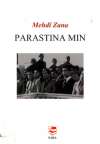
He wrote several books of testimony as well as a collection of poetry.
His testimony in French, Prison N°5, was translated into English and published in 1997 by Blue Crane Books in the United States, with a preface by Elie Wiesel, Nobel Peace Prize laureate.
His wife Leyla Zana, who entered politics through the Human Rights Association to defend political prisoners, was elected as a member of parliament for Diyarbakir in 1992. The first Kurdish woman elected to parliament in the history of the Turkish Republic, she quickly became a prominent figure because she insisted on taking her parliamentary oath in both Turkish and Kurdish, just as Mehdi Zana, despite threats and brutality, had always conducted his defence before Turkish courts in the Kurdish language. Pilloried by the Turkish media and nationalist parties and prosecuted for "separatism", she was arrested in February 1994 along a dozen other Kurdish members of parliament. She received a heavy sentence and spent 10 years behind bars in a grim Ankara prison. Her case became a cause célèbre throughout the world. President Mitterrand, German Chancellor Helmut Kohl and U.S. President Bill Clinton intervened on her behalf. She was nominated for the Nobel Peace Prize in 1995 and awarded the European Parliament's Sakharov Prize for Freedom of Thought.
The Kurdish Institute, which accompanied Mehdi Zana and Leyla Zana in their exemplary peaceful struggle for the rights, freedom and dignity of the Kurdish people, extends its heartfelt condolences to the Zana family, their relatives and the people of Kurdistan, who have lost one of their most courageous patriots.